 By Graham Fisher
Updated November 2026
Shopping for a fiskars max reel mower usually comes down to cutting width, blade count, and whether the frame suits your lawn’s size and layout. This list compares seven push reel mowers across common widths, from 14-inch models for small yards to 20-inch models for larger flat lawns. Each pick is judged on cut width, blade count, build style, and the patterns owners tend to mention most.
Our top picks at a glance
- 1
 TOP CHOICEBest overallFiskars Spindle mower (18-inch class)View on Amazon
- 2
 TOP CHOICEBest for small lawnsLawnMaster LMRM1401 14-Inch Push Reel Lawn MowerView on Amazon
- 3
 TOP CHOICEBest for a finer cutScotts 716-18S 18-Inch 7-Blade Push Reel Lawn MowerView on Amazon
- 4
 Best for wider passesLawnMaster LMRM2001 20-Inch 5-Blade Push Reel Lawn MowerView on Amazon
- 5
 Best for a classic buildScotts 2000-20S 20-Inch 5-Blade Push Reel Lawn MowerView on Amazon
- 6
 Best for budget-minded buyersLawnMaster LMRM1801 Push Reel Lawn Mower 18-Inch 5-BladeView on Amazon
- 7
 Best for durabilityGreat States 815-18 18-Inch 5-Blade Push Reel Lawn Mower, GreyView on Amazon
Our Top Picks
Quick Comparison
| Product | Best for | Key feature |
|---|---|---|
| Fiskars Spindle mower | Overall balance | 46 cm cut, StaySharp Max blades |
| LawnMaster LMRM1801 18-Inch | Budget-minded buyers | 5 blades, 18-inch width |
| Scotts 716-18S 18-Inch | Finer cut | 7 blades, 18-inch width |
| LawnMaster LMRM2001 20-Inch | Wider passes | 5 blades, 20-inch width |
| Scotts 2000-20S 20-Inch | Classic build | 5 blades, 20-inch width |
| Great States 815-18 18-Inch | Durability | 5 blades, steel construction |
| LawnMaster LMRM1401 14-Inch | Small lawns | 5 blades, compact frame |
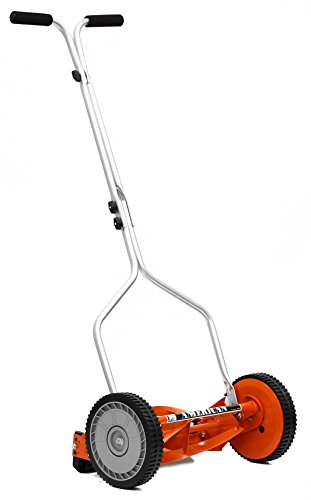
Fiskars Spindle mower (18-inch class)
FiskarsCutting width: 46 cm, StaySharp Max, Black/Orange/Silver, 1000591 Spindle mower, lawn mower with non-contact cutting system
Best for: Overall balance and a clean, low-effort cut.
This suits homeowners with a flat, moderately sized lawn who want the Fiskars name and its StaySharp Max blade coating. Owners often report that the 46 cm cutting width handles typical suburban lawns in fewer passes than narrower models.
Pros
- 46 cm cutting width covers ground efficiently
- StaySharp Max blades hold an edge longer than uncoated steel
Cons
- Not ideal for tall, thick grass without a pre-cut
LawnMaster LMRM1401 14-Inch Push Reel Lawn Mower
LawnMaster LMRM1401 Push Reel Lawn Mower 14-Inch 5-Blade
Best for: Small lawns and tight spaces.
A good fit for small front yards, patios, and narrow side strips where a wider mower is awkward to turn. Its shorter deck makes it easy to store in a garage corner.
Pros
- Light and easy to maneuver around beds
- Compact footprint for storage
Cons
- Slow on larger yards
Scotts 716-18S 18-Inch 7-Blade Push Reel Lawn Mower
Scotts 716-18S 18-Inch 7-Blade Push Reel Lawn Mower, Green
Best for: A finer cut on well-kept turf.
Seven blades mean more cuts per foot of travel, which suits lawns where the goal is a dense, tightly trimmed look. It is best kept up with regular mowing so grass never gets too tall.
Pros
- Seven blades produce a finer, more even cut
- Good for overseeded or fine-bladed lawns
Cons
- More blades mean more pushing effort on thick grass
LawnMaster LMRM2001 20-Inch 5-Blade Push Reel Lawn Mower
LawnMaster 20” 5-Blade Push Reel Lawn Mower – LMRM2001
Best for: Wider passes on larger, flat lawns.
The 20-inch deck covers more ground per pass, which helps on lawns of a quarter acre or more. It suits owners who mow regularly and want fewer overlaps.
Pros
- Wide deck reduces the number of passes
- Five blades keep effort moderate
Cons
- Harder to steer through tight gaps
Scotts 2000-20S 20-Inch 5-Blade Push Reel Lawn Mower
Scotts 2000-20S 20-Inch 5-Blade Push Reel Lawn Mower, Green
Best for: A classic build with a 20-inch cut.
This is a traditional push reel design for owners who want a simple machine with a wide cut and no moving parts beyond the reel and wheels. It suits flat, open lawns.
Pros
- Simple design with few parts to service
- Wide 20-inch cut
Cons
- Requires a periodic blade-to-bedknife adjustment
Buying Guide
Cutting Width
Cutting width is the single biggest factor in how quickly you can mow. Narrower 14-inch models suit small, tight yards and areas with lots of edging, while 18-inch and 20-inch models cover more ground per pass on larger, open lawns. Match the width to your typical mowing area so you are not spending too long on each session.
Keep in mind that a wider mower is also heavier and can be harder to push through thick or uneven grass. Choose the widest size you can comfortably control for the full length of your mowing session.
Blade Count
Reel mowers with more blades, such as 7-blade designs, generally produce more cutting strokes per foot of travel, which can give a finer, more even cut. Five-blade models are usually lighter and easier to push, which many owners prefer for regular maintenance mowing. Think about whether you want a tidier finish or a lighter push.
Frame and Build Style
Frame material and construction affect durability, weight, and how well the mower holds its adjustments over time. Steel-framed models tend to feel sturdier, while lighter builds are easier to lift and store. Look for solid wheel mounts and a comfortable handle height that fits your stature.
Blade Maintenance and Sharpening
Reel mowers need sharp blades and correct bed-knife adjustment to cut cleanly. Some models are designed to hold an edge longer and make sharpening or adjustment simpler, which can save you time over the life of the mower. Check how the blades are accessed and whether the manufacturer provides clear adjustment guidance.
Lawn Conditions and Terrain
Reel mowers work best on relatively flat, level ground with short, consistent grass. If your lawn has slopes, dense patches, or frequent tall growth, a reel mower may struggle and a different type of mower could be a better fit. Mow regularly and keep the grass short so the reel can do its job cleanly.
FAQ
What size reel mower is best for a small yard?
A 14-inch or 18-inch model is usually the most practical choice for small yards. The narrower width is easier to maneuver around beds, walkways, and corners. Measure your typical mowing area before deciding.
Is a 7-blade reel mower better than a 5-blade model?
A 7-blade mower often gives a finer, more even cut because it makes more cutting strokes per foot. A 5-blade model is usually lighter and easier to push. The better choice depends on whether cut quality or ease of pushing matters more to you.
How often should I sharpen a reel mower?
Sharpening frequency depends on how often you mow and what your lawn is like, but checking the blades at the start of each season is a good habit. Dull blades tear grass instead of slicing it, which can leave brown tips. Follow the manufacturer’s guidance for adjustment and sharpening.
Can a reel mower handle tall or thick grass?
Reel mowers perform best on grass that is kept short and cut regularly. Very tall or thick growth can clog the blades and make pushing difficult. Mow more often during growing seasons and take off no more than about a third of the blade length per cut.
Conclusion
For most owners of small to mid-size lawns, an 18-inch model offers a good balance of coverage and control, with the Fiskars Spindle mower standing out as a strong all-around pick. If your yard is tight and full of obstacles, a 14-inch model is the more practical choice, while a 20-inch mower suits larger, flat lawns where wider passes save time.
If you care most about a fine, even finish, a 7-blade design is worth considering, and if you prefer an easier push for regular upkeep, a lighter 5-blade model will likely serve you better. Matching the cutting width and blade count to your lawn size and grass type will point you to the right mower.
Related reading
- Fiskars StaySharp Max Reel Mower: 6 Best Reel Mowers Compared (2026)
- Reel Lawn Mower Fiskars: Buyer's Guide for Small to Mid-Size Lawns
- Fiskars Stay Sharp Reel Mower: 7 Best Options Compared (2026)
- Reel Mower vs Rotary Mower: Cut Quality and Lawn Health
- How to Maintain and Adjust a Reel Mower
- Best Reel Mowers
- What Reel Mower Cutting Widths Are Available? A Size Guide
About Graham Fisher
Graham Fisher is part of our editorial team and reviews and edits our lawn mowers guides, checking product details against manufacturer specifications and owner feedback.