 By Graham Fisher
Updated November 2026
A lawn mower blade sharpening machine lets you restore a dull mower blade without clamping it into a bench vise and working it by hand with a file. The best units for home use balance motor power, grinding wheel size, angle options and compatibility with the blade styles you actually run. The picks below are based on product listings, manufacturer specifications and common owner feedback patterns, not on hands-on testing.
Our top picks at a glance
- 1
 TOP CHOICEBest overallJLD10-8 Lawn Mower Blade Sharpener, 2/3HP 500W Grinder Sharpening MachineView on Amazon
- 2
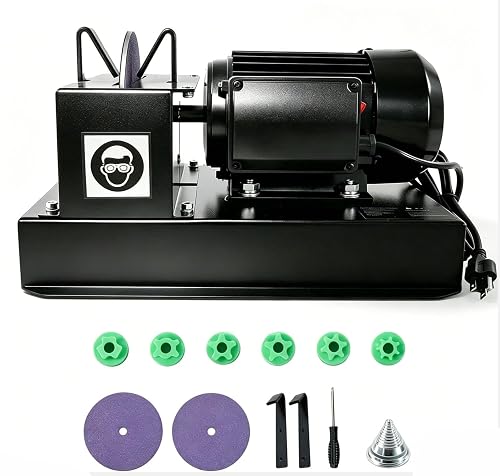 TOP CHOICEBest for multi-blade shopsLawn Mower Blade Sharpener, 2/3HP Lawnmower Blades Grinder with 7-Inch Ceramic WheelView on Amazon
- 3
 TOP CHOICEBest for heavy-duty grindingJLD Lawn Mower Blade Sharpener, 1HP Lawnmower Blades Grinder with 9" CView on Amazon
- 4
 Best budget pickLawnmower Blade Sharpener with 7" Grinding Wheel, 550W, 20 Sandpapers 60&180 GritView on Amazon
- 5
 Best for occasional home useLawn Mower Blade Sharpening Machine with 7In Grinding Wheel and Sanding Discs, 1/3HPView on Amazon
Our Top Picks
Quick Comparison
| Product | Best for | Key feature |
|---|---|---|
| JLD10-8 Lawn Mower Blade Sharpener | Overall home use | 7-inch ceramic wheel, balancer |
| Lawn Mower Blade Sharpener (B0GK8DXDXW) | Multi-blade shops | 30°/40° angle brackets |
| JLD Lawn Mower Blade Sharpener 1HP | Heavy-duty grinding | 9-inch wheel, grit collector |
| Lawnmower Blade Sharpener 550W | Budget buyers | 20 sandpapers included |
| Electric Blade Sharpener 1/3HP | Occasional use | 7-inch wheel, sanding discs |
JLD10-8 Lawn Mower Blade Sharpener, 2/3HP 500W Grinder Sharpening Machine
JLD10-8 Lawn Mower Blade Sharpener, 2/3HP 500W Grinder Sharpening Machine with 7-inch Ceramic Grinding Wheel and Balancer and 5 Sanding Discs
Best for: Overall home use on standard flat blades
This is a sensible first machine for a homeowner who sharpens a few blades per season. The 7-inch ceramic wheel and included balancer are the features owners tend to mention most.
Pros
- Includes a balancer and five sanding discs
- Mid-range motor suits routine sharpening
Cons
- Limited power for very thick, heavily nicked blades
Lawn Mower Blade Sharpener, 2/3HP Lawnmower Blades Grinder with 7-Inch Ceramic Wheel
Lawn Mower Blade Sharpener, 2/3HP Lawnmower Blades Grinder with 7-Inch Ceramic Wheel, 30°/40° Angle Brackets, Blade Sharpening Machine with Extra Sandpapers, for High/Low Lift, Gator & Flat Blades
Best for: Multi-blade shops and mixed blade types
Its 30°/40° angle brackets make it a good match for people who maintain several mowers with different blade geometries.
Pros
- Angle brackets cover both common edge profiles
- Extra sandpaper included for repeated use
Cons
- Angle setup takes more care than single-angle models
JLD Lawn Mower Blade Sharpener, 1HP Lawnmower Blades Grinder with 9″ Ceramic Grinding Wheel
JLD Lawn Mower Blade Sharpener, 1HP Lawnmower Blades Grinder with 9" Ceramic Grinding Wheel, Grit Collector & Balancer, 30°/40° Blade Sharpening Machine for High Lift, Low Lift, Gator & Flat Blades
Best for: Heavy-duty grinding and larger blades
A 9-inch wheel and 1HP motor suit owners who regularly work on heavier commercial-style or long blades and want faster material removal.
Pros
- Larger wheel covers more blade length per pass
- Grit collector helps keep the workspace clean
Cons
- Larger footprint than compact benchtop units
Lawnmower Blade Sharpener with 7″ Grinding Wheel, 550W, 20 Sandpapers 60&180 Grit
Lawnmower Blade Sharpener with 7" Grinding Wheel Blades Grinder Blade Sharpening Machine for High/Low Lift,Gator&Flat Blade Lawn Mower Blade Sharpener 2/3 HP 550W, 20 Sandpapers 60&180 Grit
Best for: Budget-conscious buyers who sharpen often
The included 60 and 180 grit sandpapers give a usable workflow out of the box, which suits someone who wants a basic setup without extras.
Pros
- Twenty sandpapers across two grits
- Supports high-lift, low-lift and gator blades
Cons
- Lower wattage than the 1HP model for heavy work
Lawn Mower Blade Sharpening Machine with 7In Grinding Wheel and Sanding Discs, 1/3HP
with 7In Grinding Wheel and Sanding Discs , 30° or 40° Blade Sharpening Machine for High Lift, Low Lift, Gator & Flat Blades Lawn Mower Blade Sharpener, 1/3HP Electric Lawn Mower Blade Sharpe
Best for: Occasional home use with light blade work
A smaller 1/3HP motor is adequate for sharpening a single mower blade a few times a year.
Pros
- Compact and easy to store
- Switches between 30° and 40° angles
Cons
- Motor may slow on thick, heavily worn edges
Buying Guide
Motor power
Horsepower and wattage indicate how well a machine holds speed under load. For routine sharpening of one or two blades, 1/3 to 2/3 HP is usually enough. Heavier nicks and larger blades benefit from more power.
Grinding wheel size
A 7-inch wheel is common and works for most residential mower blades. A 9-inch wheel covers more blade length per pass and can speed up larger jobs.
Angle compatibility
Most mower blades are ground at roughly 30° or 40°. Machines with both angle brackets let you match the original bevel, which helps preserve cutting performance.
FAQ
Can a lawn mower blade sharpening machine handle both high lift and low lift blades?
Most of the machines covered here are designed to work with high lift, low lift, gator and flat blades, but the exact fit depends on the angle brackets and grinding setup you use. Check that the model lists the blade styles you own before buying. Blade shape and mounting hole pattern matter as much as the sharpener itself.
What is the difference between a 30 degree and a 40 degree angle setting?
The angle sets how steep the cutting edge is ground, which affects how the blade cuts and how long it stays sharp. Many owners use the angle recommended in their mower manual or the setting that matches the original factory edge. Machines that offer both 30 and 40 degree brackets give you more flexibility across different blades.
Do I need to remove the blade from the mower to sharpen it?
Yes, you should remove the blade before sharpening so you can hold it securely and grind it evenly. Disconnect the spark plug wire first to prevent accidental starting. Keep the blade balanced after sharpening, since an unbalanced blade can cause vibration and uneven cutting.
Why does balancing the blade matter after sharpening?
Grinding one edge more than the other can throw the blade out of balance, which creates vibration that can damage the engine and bearings over time. A balancer helps you check whether both wings weigh about the same. Removing a little metal from the heavier side until the blade sits level is a simple way to correct it.
Is a higher motor power always better for sharpening mower blades?
Not necessarily. A stronger motor can remove metal faster, but it also heats the blade more quickly, which can soften the edge if you grind too long in one spot. For typical home use on standard mower blades, a moderate motor paired with a suitable wheel is usually enough.
How often should I sharpen my mower blade?
Many homeowners sharpen the blade at the start of each mowing season and again when the grass tears or turns brown at the tips. If you mow rocky or sandy lawns, you may need to sharpen more often. Regular light touch-ups are easier than taking off a lot of metal when the blade is badly dulled.
Conclusion
If you mostly maintain a single standard mower and want a simple, affordable setup, a smaller motor with a 7-inch wheel and clear angle options will cover your needs. Owners with several mowers or thicker blades may prefer a model with more power and a larger grinding wheel. Match the machine to your blade types and how often you plan to sharpen, and you will get a sharp, balanced blade every season.
Related reading
- Lawn Mower Blade Sharpening: A Step-by-Step Guide for Beginners
- Yard Machines Lawn Mower Won't Start: 7 Causes and Fixes
- Yard Machine Riding Lawn Mower Won't Start: 7 Causes and Fixes
- Yard Machine Lawn Mower Won't Start After Winter: 6 Fixes That Work
About Graham Fisher
Graham Fisher is part of our editorial team and reviews and edits our lawn mowers guides, checking product details against manufacturer specifications and owner feedback.