By Graham Fisher
Updated November 2026
If your Kubota lawn mower won’t start, the cause is usually one of a handful of simple problems: a weak battery, stale fuel, a tripped safety interlock, a fouled spark plug or a clogged air filter. This guide walks you through checking each of these in the order that saves you the most time, so you can find the fault and get back to mowing. Most owners can resolve the issue with basic hand tools in under an hour.
Start With the Symptoms: What Is the Mower Doing?
Before you touch anything, pay attention to exactly what happens when you turn the key or press the start button. The sound, or lack of it, tells you a lot about where the problem lives.
Shopping for one? See our guide: Lawn Mower Won't Start Without Starter Fluid: 5 Best Options Compared.
- No sound at all, no lights: Usually a dead battery, a bad connection at the battery terminals, or a blown fuse.
- Rapid clicking from the starter area: Typically a battery that has enough charge to engage the solenoid but not enough to crank the engine.
- Engine cranks but never fires: Points to fuel delivery, spark, or compression. This is the most common scenario on a Kubota that has sat over winter.
- Fires briefly, then dies: Often a fuel supply or air restriction issue, or a safety switch cutting the engine.
- Starts when cold, then stalls when warm: Look at the fuel filter, fuel pump, and possible vapor lock.
Write down what you observe. It will narrow the list of causes quickly and keep you from replacing parts you don’t need.
Step 1: Check the Safety Interlocks
Kubota mowers, especially riding models and many walk-behind units with electric start, use a series of safety switches that prevent the engine from cranking unless certain conditions are met. A mower that cranks silently or doesn’t crank at all is often waiting on one of these switches.
Common interlock conditions to verify
- The operator presence control (seat switch or bail bar) is engaged. Sit on the seat or hold the handle bar down as the manual directs.
- The PTO or blade engagement lever is in the disengaged position.
- On hydrostatic models, the transmission pedal or lever is in neutral. Check that it is fully seated, not just close.
- The parking brake is set on riding units, depending on the model.
Inspect the seat switch wiring for chafing or corrosion. A switch that is slightly out of adjustment can look fine but fail to close under the weight of the operator.
Step 2: Test and Charge the Battery
A battery problem is the single most frequent cause of a no-start complaint. Kubota electric-start mowers typically use a 12-volt lead-acid battery, and a battery that has been left discharged over the off-season can lose capacity permanently.
Testing procedure
- Set a multimeter to DC volts and measure across the battery terminals with the engine off. A fully charged 12-volt battery reads roughly 12.6 volts or higher. Below about 12.0 volts, it is discharged.
- Have someone turn the key while you watch the meter. If the voltage drops below about 9.6 volts during cranking, the battery is too weak or the cables have too much resistance.
- Clean the terminals with a wire brush and baking soda solution if you see white or green corrosion. Tighten the clamps firmly and make sure the ground cable is secure to the frame.
- Charge the battery with a quality smart charger at a low amperage setting. Let it finish its cycle before retesting.
If the battery will not hold a charge after a full charge cycle, replace it. Match the cold cranking amp rating and group size listed in your owner’s manual.
Step 3: Check the Fuel System
Fuel problems cause more no-start complaints than any other system on small engines. Gasoline that has aged more than about 30 days can begin to break down, leaving varnish and gum that clog jets and filters.
What to inspect
- Fuel quality: If the mower sat for months with gas in the tank, drain it. Fresh fuel with a stabilizer is the safe bet for future storage.
- Fuel shutoff valve: Confirm it is in the open position. This is an easy item to overlook.
- Fuel filter: Inspect the inline filter for clogging or discoloration. Replace it if it looks dark or restricted.
- Fuel lines: Look for cracks, hardening, or soft spots. Replace any line that feels brittle.
- Carburetor: If fuel is reaching the carb but the engine still won’t fire, the carburetor jets may be blocked. Cleaning or rebuilding usually restores function.
Fuel is flammable. Work outdoors, away from ignition sources, and keep a fire extinguisher nearby. If you are uncomfortable disassembling the carburetor, a qualified small-engine technician can handle it safely.
Step 4: Inspect the Spark Plug and Ignition
A healthy engine needs a strong spark at the right moment. Remove the spark plug and check it.
- Disconnect the spark plug wire and remove the plug with the correct socket.
- Look at the electrode. A dry, sooty plug suggests a rich fuel mixture or a clogged air filter. An oily plug suggests worn rings or valve issues. A white, blistered plug suggests overheating or the wrong heat range.
- Check the gap against the specification in your manual. Use a feeler gauge and adjust by carefully bending the ground electrode.
- Test for spark by grounding the plug against the engine block and cranking. You should see a bright blue spark. If not, replace the plug and check the ignition coil and kill switch wiring.
Replace the spark plug annually as routine maintenance, even if it looks serviceable. A new plug costs little and eliminates one variable.
Step 5: Clean or Replace the Air Filter
A severely clogged air filter starves the engine of air and can prevent it from starting, especially after a season of heavy cutting in dusty conditions. Remove the filter cover and inspect the element.
- Paper element: Replace it if it is dirty, oily, or bent. Tapping it gently removes loose debris, but heavy caking calls for replacement.
- Foam element: Wash it in warm water with a mild detergent, squeeze out the water, let it dry fully, then re-oil lightly with engine oil.
Step 6: Verify Oil Level and Oil Condition
Many Kubota engines have an oil level sensor that will block starting if the oil is low. Check the dipstick with the engine cold and on level ground. Add oil to the full mark using the grade recommended in your manual. Also look at the oil color: milky oil can indicate coolant or water contamination, which needs immediate attention.
Step 7: Check the Starter Circuit and Solenoid
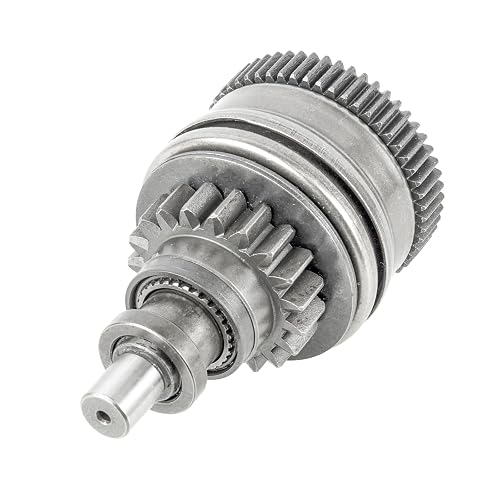
If the battery is good and you have fuel and spark but the engine still will not crank, the starter circuit is suspect. Listen for a single loud click when you turn the key. That often points to a starter solenoid that is engaging but a starter motor that is not turning, or a bad connection between the solenoid and motor. Inspect the heavy cable from the battery to the starter, and the ground strap. Corroded or loose connections cause high resistance and weak cranking.
Recommended gear
- Digital multimeter: Lets you measure battery voltage, cranking voltage and continuity in the safety switch circuit. A basic model is enough for most homeowner diagnostics. View on Amazon
- Smart battery charger and maintainer: Charges a discharged 12-volt battery safely and keeps it topped up during storage. View on Amazon
- Spark plug gap tool: A wire-style gauge makes it easy to set the gap to the value in your manual before reinstalling a plug. View on Amazon
- Fuel stabilizer: Helps prevent varnish formation in gasoline that will sit for more than a month. View on Amazon
Common mistakes
- Replacing parts before testing. Swapping the starter or carburetor without measuring voltage or checking spark often wastes money and doesn’t fix the problem.
- Ignoring the safety switches. Many owners spend hours on the engine when the seat switch or PTO lever is the real culprit.
- Using old gasoline. Fuel that is more than a month old is a common cause of hard starting, particularly after winter.
- Overpriming the engine. Repeated priming floods the cylinder. Let the engine sit for a few minutes, then try again with the choke set properly.
- Skipping routine maintenance. Dirty air filters and worn plugs make every other problem harder to diagnose.
Tips for preventing future no-start problems
- Add fuel stabilizer or run the engine dry before long-term storage, following your manual’s instructions.
- Keep the battery on a maintainer during the off-season.
- Change the oil and spark plug at the intervals specified in the owner’s manual.
- Store the mower indoors or under cover to limit moisture and temperature swings that stress the battery and fuel.
- Keep a simple log of service dates so you know when the fuel filter and air filter were last changed.
For related troubleshooting on other brands and models, see Troubleshooting a Lawn Mower That Won't Start: 8 Steps to Fix It, Riding Lawn Mower Won't Start: 7 Causes and Fixes That Work, Toro Lawn Mower Won't Start After Winter: 7 Fixes That Work, and Self Propelled Lawn Mower Won't Start: 8 Causes and Fixes. If the battery keeps dying, Ryobi Battery Lawn Mower Won't Start? 5 Best Starter Parts Compared covers a similar electrical diagnosis on a different platform.
FAQ
Why does my Kubota lawn mower click but not start?
Rapid clicking usually means the battery has enough charge to engage the starter solenoid but not enough to turn the engine. Charge or replace the battery, then clean and tighten the terminals and ground connection.
How long can gasoline sit in a Kubota mower before it goes bad?
Gasoline can begin to degrade within about 30 days, especially in warm conditions. Fuel stabilizer extends its useful life, but draining the tank is the safer option if the mower will sit for several months.
Can a dirty air filter stop a Kubota from starting?
Yes. A severely clogged filter restricts airflow and can prevent the engine from firing or cause it to run rough and stall. Inspect and clean or replace it as part of routine maintenance.
What does a bad safety switch look like?
The most common sign is an engine that won’t crank at all even though the battery tests fine. Check that the seat switch, PTO lever and transmission are in the correct positions, then inspect the switch and its wiring for damage or misalignment.
How do I know if my spark plug is bad?
Remove it and inspect the electrode. Fouling, heavy carbon, oil residue or an incorrect gap all point to a problem. Test for spark by grounding the plug against the engine and cranking; no bright spark means the plug or ignition needs replacement.
Should I use starting fluid on my Kubota mower?
Starting fluid can help diagnose a fuel problem, but it is not a fix. Overuse can damage the engine and mask the real cause. Sparingly spraying it into the air intake while cranking confirms whether fuel delivery is the issue.
When should I take my Kubota mower to a dealer or technician?
If you have checked the battery, safety switches, fuel, spark and air filter and the engine still won’t start, or if you suspect internal engine damage such as oil in the coolant, consult a qualified small-engine professional.
Conclusion
When your Kubota lawn mower won’t start, work through the problem systematically: safety switches, battery, fuel, spark, air filter, oil, then the starter circuit. Most no-start issues trace back to one of these basics, and each check takes only a few minutes. Keep up with routine maintenance and proper storage, and you will prevent most of these failures before they happen.
Ready to choose one?
About Graham Fisher
Graham Fisher is part of our editorial team and reviews and edits our lawn mowers guides, checking product details against manufacturer specifications and owner feedback.