By Graham Fisher
Updated November 2026
When a Hart electric lawn mower won’t start, the cause is usually simple: a low or disconnected battery, a safety key or handle switch that isn’t engaging, or a loose connection somewhere in the power path. This guide walks through the most common causes in the order you should check them, so you can get the mower running again without guessing. Most fixes require only a screwdriver, a multimeter and a few minutes.
Start With the Basics: Battery and Power Source
Most no-start complaints on cordless electric mowers trace back to the battery. Before you open anything, confirm the battery is seated fully in its bay and that the latch has clicked. A battery that looks inserted but sits a few millimeters high will often fail to make contact with the terminals.
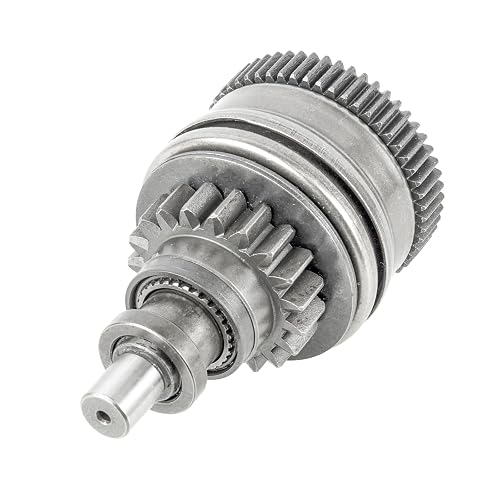
Shopping for one? See our guide: 5 Best Greenworks Electric Lawn Mower Won't Start Replacement Parts (2026).
Next, check the charge. Press the battery’s fuel gauge button if it has one, or look at the indicator lights. Many Hart packs are designed for a specific charger, and a battery that has been left fully discharged for weeks may not accept a charge right away. Let it sit on the charger for the full cycle before you judge it.
If you have a second known-good battery for the same platform, swap it in. This is the fastest way to tell whether the battery or the mower is at fault.
Quick checklist: battery and charging
- Battery fully seated and latched on both sides
- Battery charged on the matching charger for the complete cycle
- Charger plugged into a working outlet (test with a lamp or another device)
- Battery terminals free of dirt, white corrosion or debris
- Battery not visibly swollen, cracked or hot to the touch
Check the Safety Key and Operator Presence Controls
Electric mowers are built with several interlocks that prevent starting unless the machine is in a safe state. On many Hart models, the mower will not run unless the safety key or lockout is in place, the handle bail is pulled against the grip, and the blade or drive controls are in their neutral positions.
Work through these in order:
- Confirm the safety key (if your model has one) is fully inserted and turned to the run position.
- Pull the handle bail or operator presence bar firmly toward the handle and hold it while you press the start button.
- Make sure any speed or drive lever is in the correct starting position. Some models will not start if a drive lever is engaged.
- Check the discharge chute and rear bagger area for anything that may be jamming a switch or cover.
If the start button feels mushy or does not click, the switch may be worn or the wiring behind it may be pinched. Remove the cover that gives access to the switch and inspect the connector. Do not force a switch that does not move freely.
Inspect Wiring Connections and Fuses
Vibration over years of mowing can loosen plug-in connectors between the battery compartment, the control board and the motor. Unplug and reseat every accessible connector in the power path. Look for melted plastic, green or white crust on the pins, or a connector that feels loose when you wiggle it.
Some electric mowers include an inline fuse or a thermal protector. If your model has one, check whether it has tripped. A tripped thermal protector usually resets after the motor cools for 15 to 30 minutes. Repeated tripping is a sign of an underlying load problem, such as a binding blade or tall, wet grass.
Test the Motor and Control Board With a Multimeter
If the battery is good and all connections are secure, the next suspects are the switch assembly, the control board or the motor itself. Testing these requires a digital multimeter set to read DC voltage and continuity.
Use the following approach, and always disconnect the battery before you remove covers or unplug motor leads:
| Test point | What to measure | What it tells you |
|---|---|---|
| Battery terminals (under load or at rest) | DC voltage | Whether the pack is delivering a usable voltage |
| Start switch terminals | Continuity when pressed | Whether the switch is closing the circuit |
| Motor leads | Resistance (ohms) | Whether the windings are open or shorted |
| Control board input and output | Voltage with switch engaged | Whether the board is receiving and sending power |
An open reading (no continuity) on the switch or an infinite resistance reading across the motor windings points to a failed part. Consult the service manual for your exact model for expected resistance values, since they vary by motor design.
Look for Blade and Drivetrain Binding
A mower that hums briefly and then shuts off may have a blade that is jammed by a stick, a rock or wet grass clippings packed under the deck. Some electric mowers have a motor protection circuit that refuses to start when the blade is stuck. Disconnect the battery, tilt the mower safely onto its side or lean it on its handle (with the air filter and carburetor side up if applicable, though electric mowers have no carburetor), and clear any debris. Then spin the blade by hand. It should turn freely with some resistance from the blade’s own weight, not a hard stop.
Common Mistakes
- Charging a hot battery. Let the pack cool to room temperature before placing it on the charger.
- Assuming the charger works. Test the charger with a known-good battery when possible.
- Bypassing the safety key. Jumpering a safety interlock can cause injury. Replace the faulty part instead.
- Ignoring intermittent starts. A mower that starts sometimes usually has a loose connection, not a dead motor.
- Skipping the deck cleanout. Caked grass under the deck can keep the blade from turning and trigger protection shutoffs.
Tips for Preventing Future No-Start Problems
- Store the battery indoors at moderate temperatures, not in a hot shed or freezing garage.
- Charge the battery after each mowing session rather than letting it sit empty.
- Clean the deck after every few uses, especially after wet grass.
- Keep the battery terminals clean and dry, and check connectors once a season.
- Follow the owner’s manual for battery and charger care, including any recommended storage charge level.
Recommended gear
A basic digital multimeter makes it possible to test the battery, switch and motor leads without guessing. Choose one with DC voltage and continuity modes, and keep the probes in good condition.
A small wire brush and contact cleaner help remove corrosion from battery terminals and connectors. Use only products labeled safe for electrical contacts.
Dielectric grease, applied lightly to connector pins after cleaning, can slow corrosion on plug-in connections that see outdoor humidity. Apply sparingly so it does not trap dirt.
Keep a spare battery on hand if your mower’s platform allows. Swapping a known-good pack is the quickest way to rule out the battery as the cause.
For a broader look at how the same symptoms show up across brands, see Troubleshooting a Lawn Mower That Won't Start: 8 Steps to Fix It and Hart 40V Lawn Mower Won't Start: 8 Fixes to Try First. If your mower uses a brushless motor, Hart Brushless Lawn Mower Won't Start: Causes and Step-by-Step Fixes covers controller-specific checks. Owners of a related platform may also find Lawn Hog Electric Mower Won't Start: 8 Causes and Fixes useful for comparison.
FAQ
Why does my Hart electric mower start and then die immediately?
This usually means a blade or drivetrain is binding, or a protection circuit is shutting the motor down under load. Check for debris under the deck and confirm the blade turns freely by hand with the battery disconnected.
How long should I let the battery charge?
Follow the charger’s indicator and the owner’s manual. Most lithium packs take a few hours on a standard charger, and some models need a full cycle before they accept normal use.
Can a dead battery be revived?
Sometimes a deeply discharged pack will recover after several hours on the correct charger. If it still will not hold a charge or the charger will not recognize it, replacement is usually the safer choice.
Is it safe to bypass the safety key to test the motor?
No. Bypassing an interlock can allow the blade to run unexpectedly. Test with the interlock in place, or consult a qualified small-engine or electric tool technician.
Why does the mower not start after it has been stored for the winter?
Batteries lose charge in storage, and connectors can corrode in damp conditions. Fully charge the pack, clean the terminals and check the safety key before troubleshooting further.
What if the charger light blinks but the battery still won’t work?
A blinking light often indicates a fault code, such as overheating, a cell imbalance or a bad connection. Check the manual for the code meaning and let the pack cool before retrying.
When should I take the mower to a repair shop?
If you smell burning, see damaged wiring, find a swollen battery, or cannot identify the fault after the steps above, stop and have a qualified technician inspect it. Battery and electrical repairs carry real safety risk.
Conclusion
Most Hart electric lawn mower no-start problems come down to the battery, a safety interlock or a loose connection, and each can be checked in under an hour. Work through the causes in order, starting with the simplest, and test before you replace parts. If the mower still will not start after these steps, a qualified repair technician can diagnose the motor or control board safely.
Related reading
- Toro Electric Start Lawn Mower Won't Start: 7 Parts Compared (2026)
- Hart Lawn Mower Won't Start? 5 Best Parts and Fixes Compared
Ready to choose one?
About Graham Fisher
Graham Fisher is part of our editorial team and reviews and edits our lawn mowers guides, checking product details against manufacturer specifications and owner feedback.